By Ally Azzarelli
An ice rink becomes distinctive when its design, amenities, and programming work together to meet the needs of its market. The strongest models create welcoming reasons for families to visit, teams to return, event organizers to book, and communities to value and support the facility.
That can happen through regional tournament capacity, flexible event space, a retail setting, a university partnership, or deep programming around one sheet of ice. The examples below show there is no single blueprint for a successful ice rink—only a clear audience, operating model, and purpose.
- PSM Icehouse: A three-sheet regional ice ecosystem
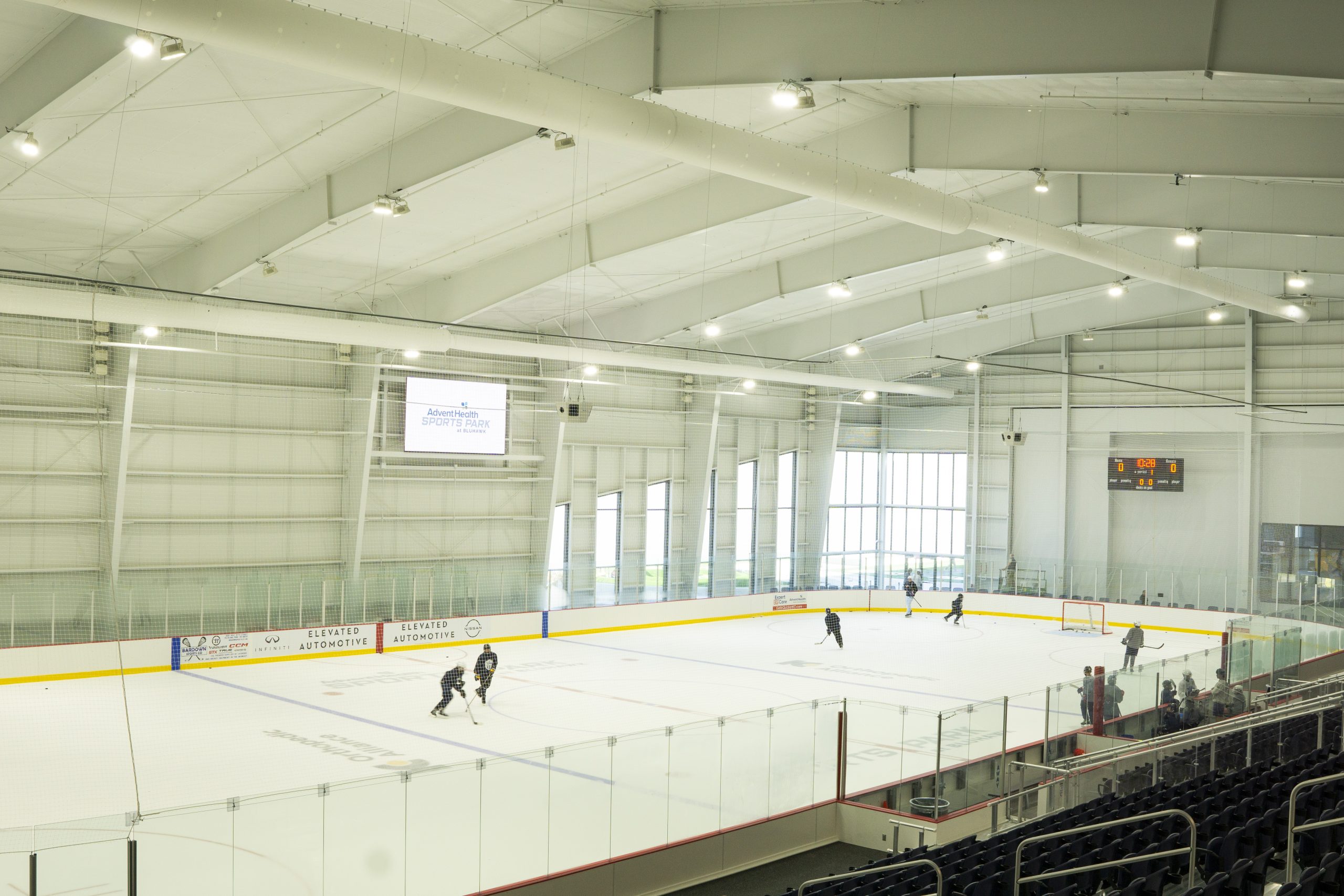
PSM Icehouse in Fort Wayne, Indiana, demonstrates what happens when an ice rink is planned to serve a region rather than only a neighborhood. The approximately 116,000-square-foot facility includes three NHL-sized ice surfaces, making it the only three-sheet ice facility in Indiana according to SFC’s case study materials.
Its model layers junior and collegiate programs, professional hockey practice operations, leagues, tournaments, figure skating, curling, public skating, and other community uses. Off-ice amenities include a restaurant, pro shop, training gym, locker rooms, and viewing areas. Learn more about PSM Icehouse.
The lesson for owners is simple: more ice sheets create value when the market can support them, and the operating plan knows how to fill them. A regional destination needs partnerships, event sales, and community programming, not just capacity.
- Woodman’s Sports & Convention Center: A convertible ice-and-events hub
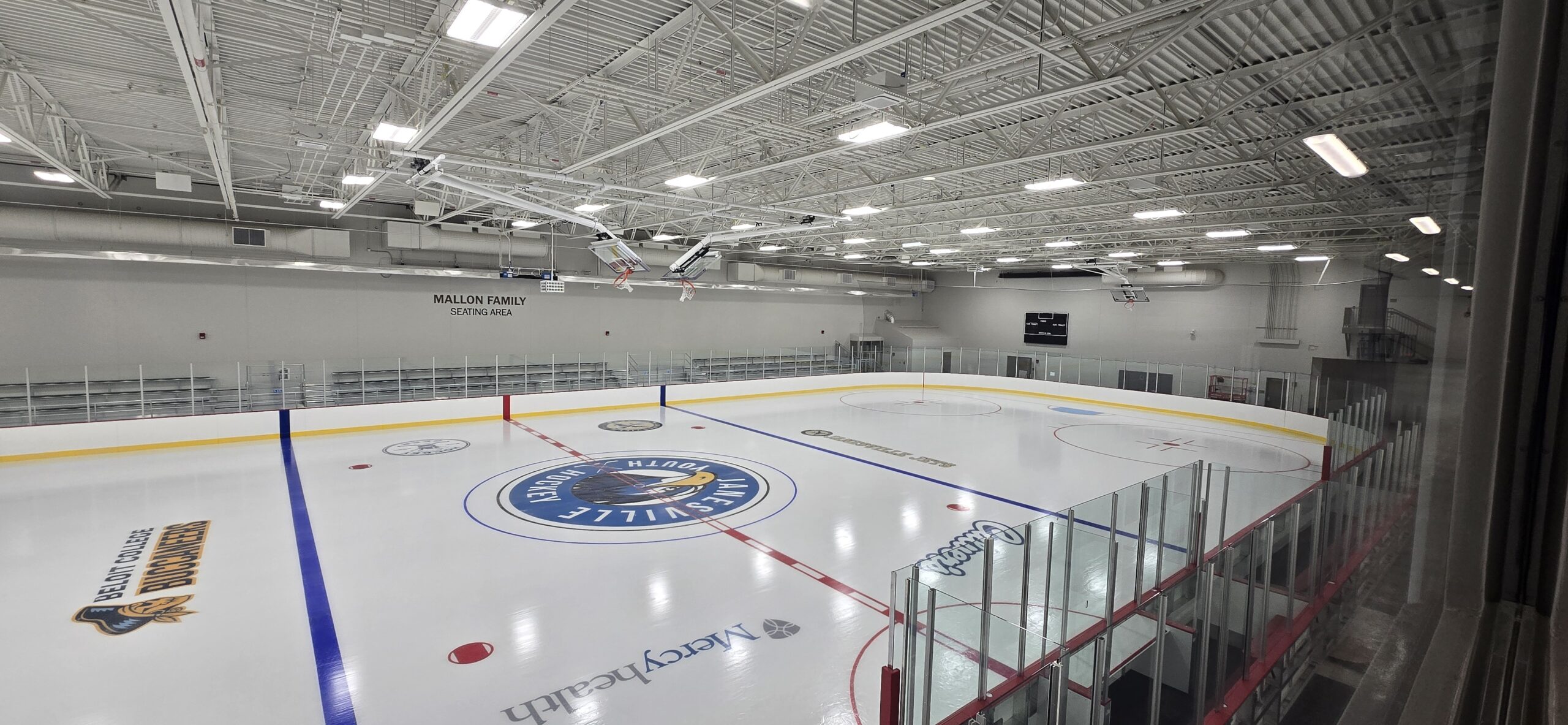
Woodman’s Sports & Convention Center in Janesville, Wisconsin, answers the question of what makes an ice rink unique with flexibility.
The approximately 140,000-square-foot facility includes the 1,500-seat Mercyhealth Arena for year-round ice sports, a 250-seat multipurpose arena that converts between seasonal ice, sports courts, and turf, and a 25,800-square-foot convention center. Explore Woodman’s Center.
This model can help communities explore uses beyond a traditional hockey and skating schedule. With thoughtful planning, owners can evaluate conversion time, storage, floor protection, staffing, and the revenue potential of each use to determine which combinations best fit the facility and its community.
- Ice Skate USA Memorial City: A retail-integrated community rink
Ice Skate USA Memorial City in Houston demonstrates how an ice rink can increase visibility and convenience by integrating with an existing destination. Located inside Memorial City Mall, the full-sized indoor rink offers public skating, hockey, figure skating, Learn-to-Skate programs, private events, a pro shop, skate sharpening, concessions, and event rentals.
That mix creates several entry points. Families may discover the rink while shopping or dining; new participants can move from a public session to a lesson; and experienced users can find programs and services in the same location. View the Ice Skate USA Memorial City profile.
For developers and municipalities, the takeaway is to treat the rink’s surroundings as part of the business model. Retail, restaurants, entertainment, housing, transit, and parking can influence discovery and repeat visits. A strong rink does not have to stand alone to stand out.
- Montclair State University Ice Arena: A university-community partnership
Montclair State University Ice Arena in Little Falls, New Jersey, illustrates the potential of a university-anchored ice facility. The two-sheet arena supports the university’s men’s and women’s hockey teams while also serving youth hockey, adult leagues, skating lessons, camps, public skating, parties, and special events.
The facility includes training and rehabilitation resources, a pro shop, and a café. SFC materials report more than 500,000 annual visitors, reflecting the reach of combining campus athletics, high-performance training, and community programming. Learn more about Montclair State University Ice Arena.
The partnership works because university athletics is an anchor, not the entire business model. Public access, youth development, events, and beginner programming broaden the arena’s value and reduce reliance on one user group.
- The Skating Edge Ice Arena: A programming-led single-sheet model
A unique ice rink can take many forms. While some facilities are defined by multiple sheets, convention space, or major institutional partnerships, others create a distinctive identity through a focused, welcoming experience. The Skating Edge Ice Arena in Harbor City, California, illustrates how one NHL-sized rink can stand out through thoughtful programming.
The facility offers public skating, freestyle skating, ice dance, stroking classes, hockey, broomball, Learn-to-Skate opportunities, parties, and events. Its programming reaches beginners, competitive skaters, hockey players, families, and groups looking for an active event experience. See The Skating Edge Ice Arena profile.
This is useful for owners working with a smaller footprint or tighter capital budget. A facility can build a broad customer base by creating a progression from first visit to repeat participation.
How Should Owners Choose an Ice Rink Model?
The best ice rink model is the one that fits local demand, site conditions, capital, operating capacity, and long-term goals. Before choosing a design, owners should ask:
- Which user groups are underserved?
- How much demand exists during peak and off-peak hours?
- Can the market support one sheet, multiple sheets, or seasonal ice?
- Which partnerships could provide reliable users or event opportunities?
- Are non-ice uses realistic for the site and operating team?
- How will the facility support access, affordability, and community programming?
A feasibility study should test those questions with market data, financial projections, competitive research, and an operating plan. The right model is the one that can perform consistently after opening day.
Build a Rink Around Purpose, Not Novelty
The most useful question is not, “How can we make this rink different?” It is, “What does this community need this rink to do?”
PSM Icehouse answers with regional scale. Woodman’s Center answers with conversion and event flexibility. Ice Skate USA Memorial City answers with destination integration. Montclair State answers with a university-community partnership. The Skating Edge answers with programming depth.
Each model is unique because it is intentional. Communities should focus on a clear role, realistic economics, and a guest experience people want to revisit.
SFC helps communities plan, develop, and operate ice rink facilities through market feasibility, financial forecasting, venue planning, owner’s representation, and facility management. Connect with SFC’s ice rink experts to evaluate the right model for your community.
Frequently Asked Questions About Unique Ice Rinks
What makes an ice rink unique?
An ice rink is unique when its design, programming, partnerships, or setting gives it a clear role beyond basic ice access, such as hosting regional tournaments, supporting community recreation, advancing university athletics, or accommodating flexible events.
What is the best ice rink model for a community?
There is no universal best model. The right choice depends on local demand, competition, site conditions, funding, operating resources, and public goals. A feasibility study can compare different approaches.
Can an ice rink serve more than hockey?
Yes. Ice rinks can support figure skating, Learn-to-Skate programs, public skating, curling, broomball, camps, parties, private events, training, and community gatherings.
How can an ice rink operate year-round?
Year-round operations can come from permanent indoor ice, off-ice programming, event rentals, food and beverage, retail, training, camps, and convertible spaces.
Why should owners study other ice rink facilities?
Comparable facilities can reveal ideas for programming, partnerships, amenities, scheduling, guest flow, and revenue diversification. They should inform planning, not replace local analysis.